Boiling sweet potatoes is one of the easiest and healthiest ways to prepare this naturally sweet and nutrient-rich root vegetable. Whether you’re making a quick side dish, prepping for meal plans, or creating a base for mashed recipes, boiling helps retain moisture and enhances the natural flavor.
Unlike baking or frying, boiling requires minimal ingredients and effort. Plus, it softens the sweet potatoes evenly, making them ideal for both savory and sweet dishes. If you’ve ever wondered how to achieve perfectly tender sweet potatoes without overcooking them, this guide will walk you through every step.
Choosing the Right Sweet Potatoes
Before you begin boiling, selecting the right sweet potatoes can make a noticeable difference in taste and texture.
- Firmness: Choose sweet potatoes that feel solid with no soft spots.
- Skin Quality: Look for smooth, unwrinkled skin without cuts or blemishes.
- Color Varieties: Orange sweet potatoes are sweeter and softer, while white or purple varieties tend to be firmer and slightly less sweet.
Fresh, high-quality sweet potatoes will boil more evenly and deliver better flavor.
Preparation: What You Need Before Boiling
Getting everything ready beforehand ensures a smooth cooking process. Here’s what you’ll need:
- Sweet potatoes
- A large pot
- Water
- A knife or vegetable peeler
- A fork (for testing doneness)
- Optional: salt for flavor
To Peel or Not to Peel?
This depends on your preference. You can boil sweet potatoes:
- With skin on: Helps retain nutrients and shape
- Peeled: Creates a smoother texture, perfect for mashing
Both methods work well, so choose based on your recipe.
Step-by-Step: How to Boil Sweet Potato
Follow these simple steps to get perfectly boiled sweet potatoes every time:
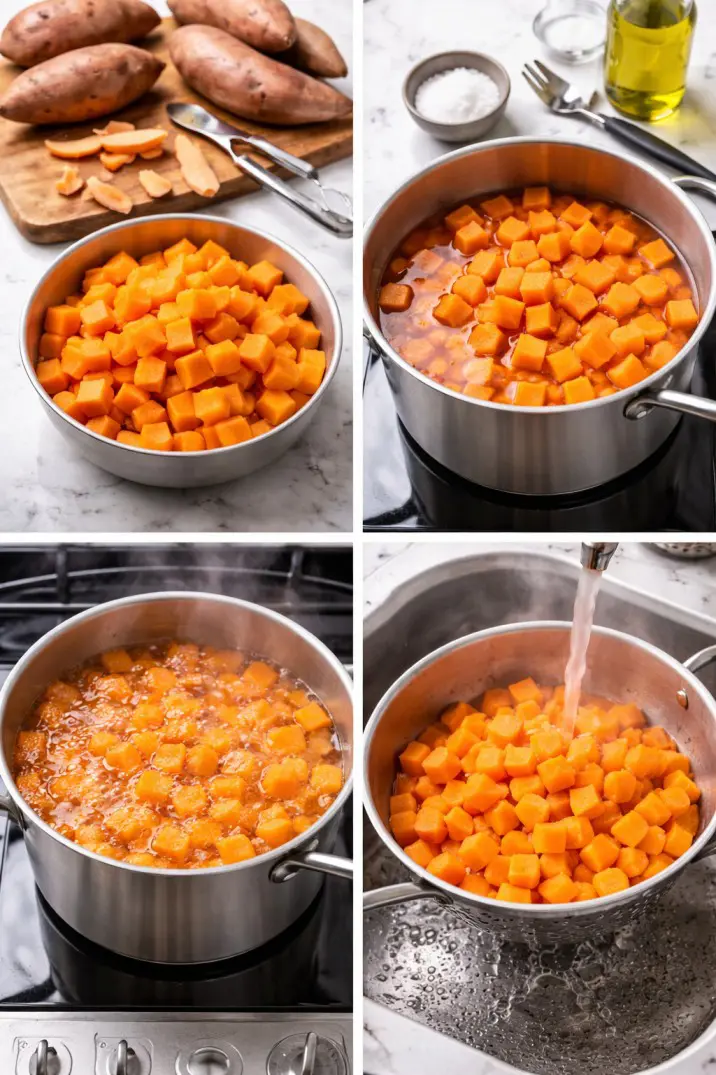
1. Wash and Cut
Rinse the sweet potatoes thoroughly under running water to remove dirt.
Cut them into evenly sized chunks (about 1–2 inches) for faster and uniform cooking.
2. Place in a Pot
Add the sweet potato pieces to a large pot. Arrange them in a single layer if possible.
3. Add Water
Pour enough water to fully cover the sweet potatoes by about an inch. You can add a pinch of salt for enhanced flavor.
4. Bring to a Boil
Place the pot on medium-high heat and bring the water to a rolling boil.
5. Reduce Heat and Simmer
Once boiling, reduce the heat to medium and let the sweet potatoes simmer gently.
6. Check for Doneness
Cook for about 10–20 minutes, depending on the size of the pieces.
Insert a fork or knife—if it slides in easily, they’re done.
7. Drain and Serve
Drain the water using a colander and let the sweet potatoes cool slightly before serving or using in recipes.
How Long Does It Take to Boil Sweet Potatoes?
Cooking time can vary depending on size and whether the sweet potatoes are whole or cut:
- Small cubes: 10–15 minutes
- Medium chunks: 15–20 minutes
- Whole sweet potatoes: 30–50 minutes
Cutting them into smaller pieces significantly reduces cooking time and ensures even softness.
Tips for Perfectly Boiled Sweet Potatoes
To elevate your results, keep these helpful tips in mind:
- Cut evenly: Uniform pieces cook at the same rate.
- Avoid overcooking: Overboiling can make them mushy and watery.
- Start with cold water: This helps cook the sweet potatoes evenly from the inside out.
- Don’t overcrowd the pot: Give them enough space to cook properly.
- Use a lid partially: Speeds up cooking while preventing overflow.
These small adjustments can make a big difference in texture and flavor.
Flavor Variations and Enhancements
Boiled sweet potatoes are delicious on their own, but you can easily enhance their flavor:
Savory Options
- Add butter, salt, and black pepper
- Sprinkle garlic powder or herbs like thyme
- Toss with olive oil and chili flakes
Sweet Options
- Drizzle with honey or maple syrup
- Add cinnamon and a pinch of nutmeg
- Mash with a bit of brown sugar and butter
This versatility makes boiled sweet potatoes suitable for a wide range of meals.
Common Mistakes to Avoid
Even a simple method like boiling can go wrong if you’re not careful. Here are a few mistakes to watch out for:
- Overcooking: Leads to overly soft, waterlogged potatoes
- Uneven cutting: Causes some pieces to cook faster than others
- Skipping the rinse: Dirt or debris can affect taste
- Too much water after boiling: Always drain thoroughly to avoid sogginess
Avoiding these mistakes ensures a better cooking experience and tastier results.
Creative Ways to Use Boiled Sweet Potatoes
Once boiled, sweet potatoes can be used in countless recipes:
- Mashed Sweet Potatoes: Smooth and creamy side dish
- Salads: Add chunks to grain or green salads
- Soups: Blend into creamy soups for natural sweetness
- Meal Prep Bowls: Pair with proteins and veggies
- Baby Food: Mash for a nutritious, soft meal
Their soft texture makes them incredibly versatile in both sweet and savory dishes.
Nutritional Benefits of Boiled Sweet Potatoes
Boiling sweet potatoes helps preserve many of their nutrients, making them a healthy addition to your diet.
- Rich in fiber for digestion
- High in vitamin A for eye health
- Contains vitamin C and antioxidants
- Naturally low in fat and calories
They are especially great for those looking for a wholesome, filling food option.
Conclusion
Learning how to boil sweet potato is a basic kitchen skill that delivers consistently satisfying results. With just a few steps, you can create a soft, flavorful ingredient that works in countless recipes. Whether you prefer them savory or sweet, boiled sweet potatoes are a reliable and nutritious choice for everyday meals.
Once you master this method, you’ll always have a quick and healthy option ready to go in your kitchen.